



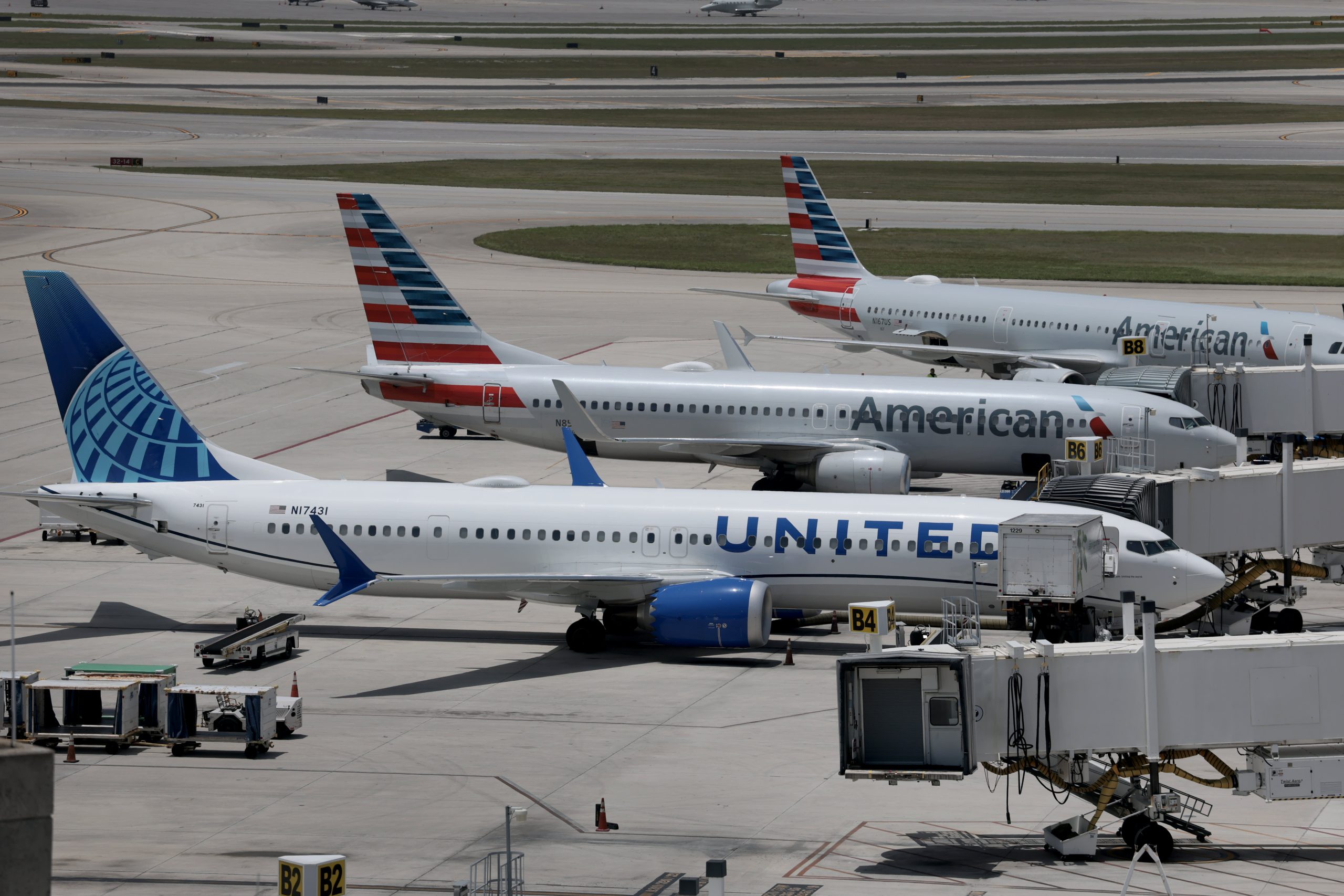
Oscar Wong | Moment | Getty Images
Traveling during the shoulder season is often touted as a reliable way for people to save money compared with budget-busting travel during the summer months.
But those savings are shrinking — in some cases disappearing altogether — and deals can be harder to find, according to travel companies and experts.
The shoulder season lies between a destination’s peak and offseason for tourism.
In many places, for example, it’s the fall season that runs roughly from early September until mid-November — in other words, after summer and before the winter holidays, which are generally busier and more expensive times to travel.

Historically, shoulder season has meant lower demand and lower prices for airfare and hotels, especially for popular vacation destinations overseas — with the added benefit of weather that’s generally still warm, experts said.
However, that seasonal savings is becoming less reliable — and comes as overall travel costs have risen sharply due to the Iran war.
“In many ways, I think that’s the irony of shoulder season: It has become more desirable because it’s a better time to travel,” said Sofia Markovich, a travel advisor and founder of Sofia’s Travel. “And because everyone is discovering that, it’s becoming less of a bargain.”
Shoulder season price trends for U.S. travel
Grand Canyon National Park
Jacobs Stock Photography | Photodisc | Getty Images
Data shows the shoulder season discount for travel within the U.S. has all but disappeared in recent years.
In 2023, travelers could expect to pay 20% less, on average, for round-trip domestic flights during the fall shoulder season compared with trips during the summer months, which run roughly from Memorial Day to Labor Day, according to data from Hopper, a travel app.
However, that savings margin has steadily eroded, and even flipped this year: Prices this fall will be just above fares in summer, Hopper found.
Expedia data also suggests that summer demand “has spilled into fall” and travelers will need to be “more strategic” to find a deal, the online travel agency said in its Fall Travel Outlook.
Lodging prices are 20% higher in fall versus summer in the top 10 U.S. destinations, while airfare is up 2%, Expedia found.
The most popular areas, according to lodging search volume, are: New York, Las Vegas, Orlando, Florida, Boston, Los Angeles, Chicago, Miami, Nashville, Tennessee, New Orleans and Honolulu, Expedia said.
It compared prices for the May 25 to Sept. 7 time frame versus Sept. 7 to Nov. 26.
“The idea of [fall] being a low-demand period with low prices is increasingly less true,” said Hayley Berg, lead economist at Hopper Technology Solutions, the company’s business-to-business unit. “Those shoulder season discounts have been shrinking.”
Shoulder season price trends for international travel
Tourists take photos as they visit the Sagrada Familia basilica in Barcelona, on August 2, 2025.
Manaure Quintero | Afp | Getty Images
International travel pricing is a mixed bag, data shows.
For example, in 2026, prices are equivalent in fall and summer for an average round-trip flight from the U.S. to the Mexico and Central America region, Hopper found. Four years ago, fall flights were 11% cheaper relative to summer, it said.
Elsewhere, U.S. travelers can still generally score savings on international airfare during shoulder months, Berg said.
“But you’re not saving to the degree you had been,” she said.
Hopper data shows, for example:
- Europe: In 2023, flights from the U.S. to Europe were 33% cheaper during the fall shoulder season than during summer, on average. The savings margin has declined to 22% in 2026.
- Asia: Travelers flying to Asia can save an average 21% in 2026 by flying during the fall shoulder season instead of summer — a drop from 29% savings in 2023.
- Middle East and Africa: Flights to the Middle East and Africa are 16% cheaper during fall than summer in 2026 — a decline from 26% in 2023.
- Oceania: The savings margin for flights to Australia, New Zealand and other Pacific islands has decreased to 7% from 18% over the same time frame.

Flights from the U.S. to the top 10 international locales are 3.2% more expensive this fall relative to summer, on average, according to Expedia data shared with CNBC.
The 10 most popular areas abroad this fall are: Tokyo, Cancun, Mexico, Paris, Punta Cana, Dominican Republic, Rome, London, Aruba, Playa del Carmen, Mexico, Barcelona, Spain, and Cabo San Lucas, Mexico, based on lodging search volume, according to Expedia.
Lodging in those areas is marginally pricier, at 0.7% more expensive versus summer, it found.
“[In] many of the destinations I work with, particularly across the Mediterranean, September is no longer automatically a ‘shoulder-season bargain,'” Markovich said. “Popular destinations in Spain, Italy, Greece, Croatia and France can be just as busy as ever.”
Why are shoulder season discounts shrinking?
A tourist shelters from the sun under an embrella during a heatwave in Paris on July 10, 2026.
Behrouz Mehri | Afp | Getty Images
There are several potential drivers of this trend, according to travel experts.
For one, the rise of remote work during and after the Covid-19 pandemic era has afforded flexibility in many people’s travel schedules — meaning there are fewer low-demand periods.
Improving technology and travel search engines also give travelers more transparency into price deals for various destinations at particular times of year, experts said. In other words, more eyeballs on cheap fares and rates drives up demand, and prices typically follow.
In addition, budget airlines have struggled since the pandemic amid factors like higher operating expenses, leading to reduced availability of low-cost fares, Berg said. Spirit Airlines, a low-cost carrier, shut down operations in May.

Climate change has also raised summertime temperatures in many tourist hot spots to record levels, leading some travelers to avoid summer months altogether, experts said. Western Europe this year logged its hottest June-July on record, for example, and wildfires raged across Greece, France and Spain.
“Maybe people don’t see those peak-season months as being as desirable as they did before,” said Aran Ryan, director of industry studies at Tourism Economics.
Tourists cross the Rialto Bridge on February 16, 2025 in Venice, Italy.
Stefano Mazzola | Getty Images News | Getty Images
Overcrowding in certain destinations may also be a factor, experts said.
“For a lot of people, going to Rome in the summer is very stressful,” Brett Snyder, founder of the Cranky Flier blog and Cranky Concierge travel agency, told CNBC last month.
Not only is it “very hot,” but there can also be “crushing crowds,” which is especially true of Mediterranean destinations, he said. That drives more would-be summer travelers into the fall, he said, driving up demand and prices.
“The more people that go in the summer, the more that pushes people to fly on an off-peak time, because it will be a better experience for them,” Snyder said.
Travel prices are higher overall
A Lufthansa passenger aircraft is parked at a gate while a SASCA fuel truck services it on the apron at Toulouse Blagnac Airport in Blagnac in Occitanie in France on March 15, 2026.
Isabelle Souriment | AFP | Getty Images
The trend comes as overall travel costs have risen significantly during the post-pandemic period, most recently due to the war with Iran, experts said.
Airfare for domestic round-trip flights was $366 for the week of Aug. 17, on average, up 34% from a year earlier, according to Kayak data. Average international fares were $893, up 25% over the same period.
That is largely due to a sharp increase in the price of jet fuel, a major input cost for airlines, said Berg of Hopper. Jet fuel is refined from crude oil, supplies of which have been severely disrupted by the Iran war.
The streets of old Oaxaca, Mexico.
Thomas Barwick | Digitalvision | Getty Images
Even amid a backdrop of rising travel prices and shrinking seasonal discounts, shoulder season isn’t disappearing altogether, Markovich said.
“I think it’s being pushed and compressed,” she said. While September is becoming “a new high-demand period,” the “real value is moving later into October and November.”
For clients who prioritize travel in September or early October — rather than deferring later into the fall — she encourages them to book early.
For many of Markovich’s clients, though, traveling during the shoulder season is less about saving money and more about having a better experience, she said.
“They want good weather without the intensity of summer, fewer crowds, better access to restaurants and experiences, and a more relaxed pace,” Markovich said. “And many are willing to pay a little more for that.”


