



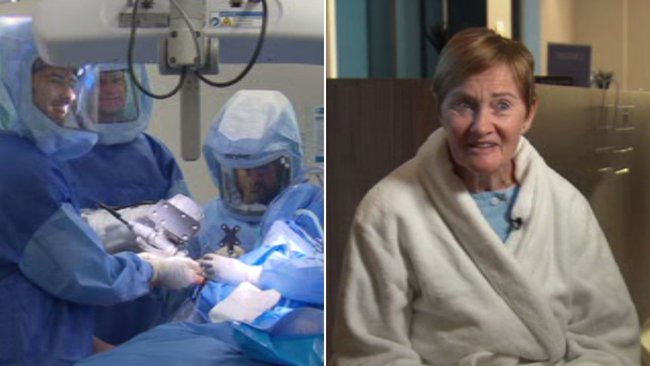
A grandmother who spent years living with chronic shoulder pain has become one of the first people in Australia to undergo a new robotic shoulder replacement procedure.
For years, Adelaide resident Carol Beatty battled arthritis in her shoulder, making everyday tasks difficult and disrupting her sleep.
WATCH THE VIDEO ABOVE: Robotic surgery transforms shoulder replacements in Australia
Know the news with the 7NEWS app: Download today
“It’d be nice to have no pain, be able to lay on my side in bed, be able to be more active with the grandkids,” she told 7NEWS.
This week, Beatty underwent robotic shoulder replacement surgery at Eastwood Hospital, becoming the first patient at the facility to receive the procedure.
“I’m taking this shot because anything that forwards medicine is a plus,” she said.

The operation uses the Mako robotic system, which creates a detailed map of a patient’s joint before surgery and helps guide surgeons with a high degree of precision.
“Being able to access that for patients in Australia and Adelaide is very exciting,” orthopaedic surgeon Dr Luke Mooney told 7NEWS.
Unlike conventional surgery, the robotic technology continuously tracks the procedure and prevents surgeons from moving outside the planned treatment area.

“The precision of this machine is just crazy,” Adelaide Shoulder and Upper Limb Clinic surgeon Dr Oscar Brumby-Rendell said.
“Even if you try to push it way out of its zone, it just doesn’t let you and cuts off and feels like you’re hitting an invisible wall.”
Surgeons say the increased accuracy can reduce damage to surrounding soft tissue, minimise post-operative pain and swelling, and potentially improve the lifespan of joint replacements.
“The best thing about the robot when we’re operating is we’ve got a tool that we can trust,” Dr Mooney said.

The technology has already been used extensively for hip and knee replacements. Surgeons say its successful use in shoulder surgery marks the next step in the evolution of robotic-assisted joint replacement.
For Beatty, the goal is simple: less pain and more time with her family.
And after years of putting up with arthritis, she’s hoping the procedure will help her get back to doing the things she loves.


