



Charles Spencer is a bestselling author, historian and broadcaster but around the world he is best known as the younger brother of the late Princess of Wales.
The earl shared a close and protective sibling relationship with Diana, forged during their childhood and shaped by the difficult divorce of their parents.
He remained a constant support and confidant for the late princess, particularly after her marriage to then Prince Charles, which thrusted Diana into the complex world of the royal family.
Know the news with the 7NEWS app: Download today
It is against that backdrop that Spencer’s new memoir about his sister takes on particular significance.
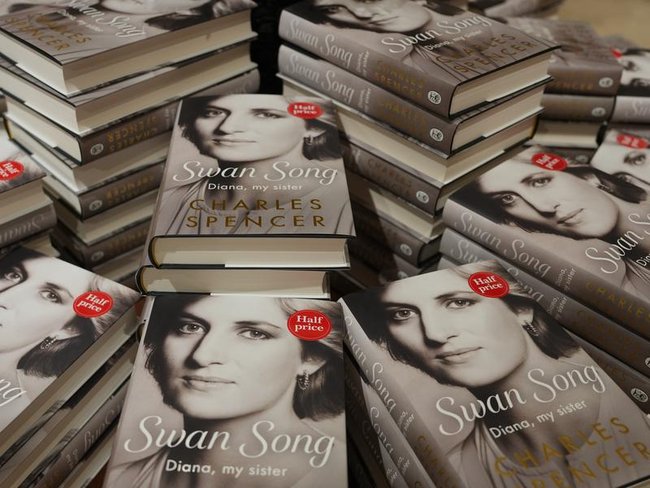
Swan Song: Diana, My Sister was published ahead of the 30th anniversary of Diana’s death, with the book offering a deeply personal account of a woman whose life Spencer witnessed not as a distant royal observer but as her brother.

Despite attracting criticism from some who believe he is monetising the memory of his sister, Spencer remains focused on keeping Diana’s life and legacy alive.
And it is those intimate, painful and sometimes deeply revealing memories that provide the foundation for some of the biggest moments, and controversial accusations, in his new memoir.
These are the biggest claims from Charles Spencer’s Diana book.
Explosive accusations about King Charles
Spencer’s book recounts his conversation with Charles, the then prince of Wales, just days after Diana’s tragic death in August 1997.
In the memoir, Spencer claims he had tried to stop his nephews, Princes William and Harry, from being paraded through the streets for Diana’s funeral because it would have been against her wishes.
Spencer said Charles called him, saying he had walked in his great-uncle’s funeral procession decades prior and so William and Harry should walk in their mother’s procession.

But Charles allegedly became angry when Spencer pointed out he was 30 years old at the time of his great-uncle’s funeral, while William and Harry were then aged 15 and 12 respectively.
Spencer accused the now-king of unleashing “pent-up contempt” for Diana.
“Rest assured, we’ll forget her soon enough,” Charles allegedly told Spencer.
Despite Spencer’s objections, William and Harry both took part in the funeral procession — walking on either side of him as the world watched on.
Buckingham Palace issued a rare response to the allegations, noting it does “not comment on books as a matter of principle”.
“His Majesty is mindful that the pain of fraternal grief can cloud reason, affect judgement and colour memory in ways others do not recognise, even many years after such a loss,” Buckingham Palace said.

Spencer believed his sister had ADHD
Spencer claims Diana had “learning difficulties” but due to the lack of understanding during her schooling years, she went undiagnosed for ADHD, a common neurodevelopmental condition that affects how the brain develops, focuses and self-regulates.
“She was never even tested, despite the evidence of significant problems being there from the start. Diana had some of the key symptoms associated with ADHD,” he claims in the book.
Spencer has been open about his own diagnosis with ADHD later on life. In an interview with Marie Claire, the earl said while his sister struggled with certain aspects of royal life, he believed having ADHD actually gave her a leg up in some ways.

“I think it enhanced the natural empathy in her,” Spencer said.
“I think that’s where I see her ADHD explaining some of her extraordinary public life.
“I think she cut through the conventional way of looking at causes to see the bits that really mattered.”
Diana was deeply affected by their father’s second marriage
Princess Diana’s parents, John Spencer and Frances Shand Kydd, divorced in 1969 after a bitter separation that deeply impacted her childhood.
In 1976, Diana learned from newspapers their father had remarried Raine, then the Countess of Dartmouth.
There was no love lost between Diana, Charles and Raine in her first years of living with the Spencer family. The children gave her the nickname “Acid Raine”, according to The Telegraph.

“We had happily accepted his earlier girlfriends, but we could see that Raine was primarily interested in getting her hands on Althorp, and its contents, rather than truly loving the father we all adored,” Spencer claims in the book.
“We had warned him and urged him to recognise her for the gold-digger she famously was.”
Spencer alleges Diana was “disappointed” and “outraged” by their father’s second marriage.
Charles further claims the relationship with their stepmother deteriorated after John suffered a stroke in 1978, allowing Raine to take more control of the estate before his recovery.
Diana surprisingly appeared to patch things up with Raine in the last few years of her life.
In Swan Song, the earl remembers his sister making the surprising gesture of holding Raine’s hand as they left the church after his father’s funeral service.
Diana’s family wanted to have a small funeral
At Diana’s funeral at Westminster Abbey in 1997, Spencer delivered a famously emotional and defiant eulogy, promising that his family would protect Diana’s sons while condemning the relentless press attention that had followed his sister throughout her life.
In his book, Spencer claims his family wanted to farewell Diana privately, after the years of her life being thrust into the spotlight.
“Some of us were angry, and protective, feeling we had lent Diana to the world for a decade and a half, and that that sacrifice had ended in the darkest of tragedies,” Spencer wrote.
“Now, it seemed to us, was the time for us to reclaim her broken body, for quiet and dignified committal and safekeeping.
“This, we felt, should be as we saw fit, and certainly in private.”
Diana’s eating disorder
Princess Diana candidly described her bulimia as an “escape mechanism” and a “symptom of what was going on in my marriage”, noting she was crying out for help while others treated the disorder itself as the main problem.
Her struggle with an eating disorder was laid bare by the princess herself in Andrew Morton’s 1992 biography.
It’s an issue Spencer also delves into in his book, alleging that a stinging comment from Charles had “increased” her insecurities.
“Her insecurity was increased a few days after the engagement announcement when Prince Charles had squeezed her waist and said, ‘Oh, a bit chubby here, aren’t we?’,” he claims in the book.
“This was a comment she found devastating (she would later share with me that her waist shrank from 29 inches to 23½ inches between her engagement and her marriage).”

Spencer also writes about the immense guilt he carried for not being able to help as Diana “battled such demons”.
Queen offered to ‘restore Diana’s title’
When Diana and then-Prince Charles divorced in 1996, the Princess of Wales lost the title of Her Royal Highness.
According to Spencer, the late Queen Elizabeth offered to restore the title after Diana’s death in 1997.
He claimed the message was relayed by the Queen’s private secretary, Robert Fellowes, while they were on the royal train travelling to Diana’s private burial at Althorp on the day of her funeral.
“When we had gone some miles, Robert beckoned me to follow him into a quiet corner of the carriage,” Spencer wrote.
“ ‘I have just received a call from Her Majesty,’ he said, in the grave tone that he always adopted when talking about the Queen, ‘and she would like to offer Diana her HRH title back’.”
Spencer claims he declined the offer, viewing it as a “hollow” gesture and “consolation prize” that he says would have meant nothing to his sister.


